Essential Skills Every IT Student Should Master During Undergraduate Studies
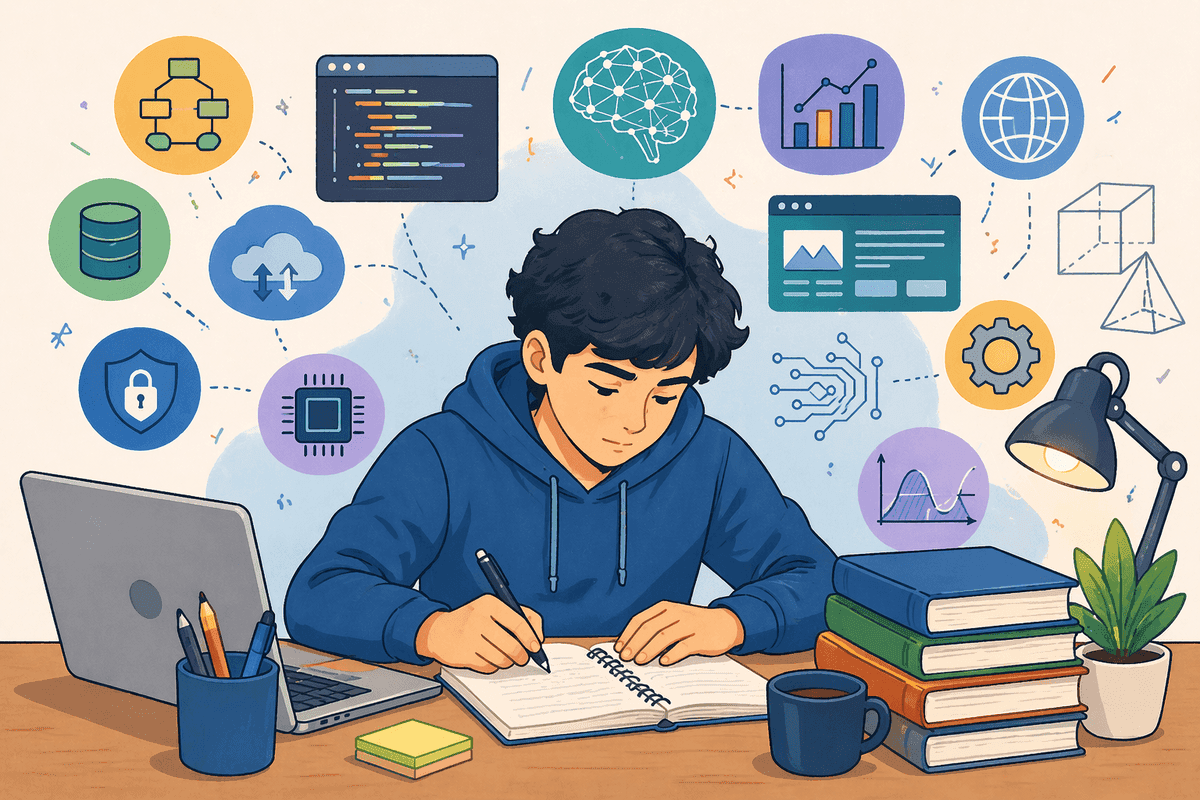
💡 Introduction to IT Skill Development
Mastering the essential skills required for undergraduate IT students begins with a comprehensive understanding of the technology sector. As the IT industry evolves rapidly, obtaining a degree alone is insufficient. Employers increasingly seek candidates who can effectively apply their knowledge rather than merely recall information.
🎯 Why Skills Matter More Than Degrees
In the current competitive environment, practical skills frequently hold greater value than academic achievements. Employers prioritize problem solvers, innovators, and effective team members. While a degree provides foundational knowledge, it is the development of relevant skills that determines professional success.
Students who build projects, contribute to open-source initiatives, or complete internships distinguish themselves from those with only theoretical knowledge. In summary, practical skills bridge the gap between academic education and employment.
🏢 Industry Expectations from Graduates
Employers expect IT graduates to:
- Write clean, efficient code.
- Solve real-world problems
- Work in teams using agile methods.
- Adapt to new technologies quickly.
💻 Technical Skills Every IT Student Needs
Technical skills form the foundation of any IT career. Without these competencies, success in the field is unlikely.
👨💻 Programming Fundamentals
Programming constitutes the core of information technology. All students should develop a thorough understanding of the following concepts:
- Variables and data types
- Loops and conditionals
- Functions and logic building
🔥 Popular Programming Languages
Some essential languages include:
- Python (easy and versatile)
- Java (widely used in enterprise systems)
- JavaScript (essential for web development)
- C++ (important for performance-based applications)
🧪 Practice
To enhance coding proficiency, students are encouraged to practice regularly using platforms such as:
- LeetCode
- HackerRank
- Codeforces
📊 Data Structures and Algorithms
A comprehensive understanding of data structures, including arrays, linked lists, trees, and graphs, is essential.
⚙️ Importance in Problem Solving
These concepts help:
- Optimize code performance
- It is important for IT students to understand the principles of data storage and management.
🗄️ Database Management
Every IT student should learn how data is. An understanding of the Software Development Lifecycle (SDLC) enables students to develop software in a systematic and structured manner.Software Development Lifecycle (SDLC)
Understanding SDLC helps students build software systematically.
⚡ Agile and Scrum Basics
Agile focuses on:
- Iterative development
- Continuous feedback
- Team collaboration
🔌 Understanding Computer Networks
Students should learn:
- IP addressing
- Security Fundamentals
🔐 Security Fundamentals
Cybersecurity knowledge includes:
- Encryption basics
- Firewalls
- Ethical hacking concepts
Web and Mobile Development Skills
🎨 Frontend Development
Frontend focuses on what users see:
- HTML, CSS, JavaScript
- Responsive design
⚙️ Backend Development
Backend handles logic and databases:
- Node.js, Django
- APIs and servers
📱 Mobile App Basics
Students can explore:
- Android (Java/Kotlin)
- iOS (Swift)
- Cross-platform tools like Flutter
🤝 Soft Skills for IT Students
Technical knowledge alone is insufficient; soft skills also play a critical role in professional success.
🗣️ Communication Skills
IT professionals are expected to communicate complex concepts clearly. Effective communication enhances both teamwork and client interactions.
👥 Team Collaboration
Working in teams requires:
- Respect for others’ ideas
- Conflict resolution
- Shared responsibility
🧩 Critical Thinking and Problem Solving
This skill helps students:
- Analyze situations
- Identify solutions
- Make informed decisions
🛠️ Tools and Technologies to Master
📂 Version Control Systems
Version control systems are essential tools for managing and tracking changes in code.
🐙 Git and GitHub
Students should learn:
- Branching and merging
- Pull requests
- Collaboration workflows
☁️ Cloud Computing Basics
Cloud computing represents a significant trend within the information technology sector.
🌩️ Popular Cloud Platforms
- AWS
- Microsoft Azure
- Google Cloud
📁 Project Experience and Internships
🚀 Importance of Real-World Projects
Projects provide a more effective demonstration of abilities than examinations. They illustrate the following competencies:
- Practical skills
- Creativity
- Problem-solving ability
📌 Building a Portfolio
A comprehensive portfolio should include the following elements:
- Personal projects
- GitHub repositories
- Internship experience
⏳ Time Management and Productivity
📅 Study Techniques
Effective strategies include:
- Pomodoro technique
- Active recall
- Spaced repetition
⚖️ Balancing Theory and Practice
Students are advised to:
- Spend time coding daily.
- Apply theoretical concepts in projects.
📚 Continuous Learning Mindset
🔄 Keeping Up with Trends
Given the rapid pace of technological change, students must remain informed through the following methods:
- Blogs
- Tech news
- Online communities
🎓 Certifications and Online Courses
Certifications serve to validate technical skills. Online platforms such as Coursera and Udemy provide valuable educational courses.
For more insights, visit this helpful resource:
👉 https://www.coursera.org
❓ FAQs
1. What are the most important skills for IT students?
Programming, problem-solving, communication, and teamwork are essential.
2. How can IT students improve coding skills?
Practice daily on coding platforms and build real-world projects.
3. Is internship experience necessary?
Yes, internships provide practical exposure and improve employability.
4. Which programming language should beginners learn first?
Python is recommended due to its simplicity and versatility.
5. Are soft skills important in IT careers?
Absolutely! Communication and teamwork are critical in professional environments.
6. How can students stay updated with technology trends?
Follow tech blogs, take online courses, and participate in communities.
🏁 Conclusion
Mastering the essential skills required during undergraduate studies is fundamental to establishing a successful career in technology. By integrating technical expertise, soft skills, practical experience, and a commitment to continuous learning, students can distinguish themselves within the competitive IT industry.
Success is achieved through consistent effort, curiosity, and a commitment to ongoing learning. Early engagement, sustained focus, and continuous improvement are essential for a successful future in information technology.